Dutchess County, NY · Hudson Valley, New York
Forestry Mulching with the Bobcat Skid Steer
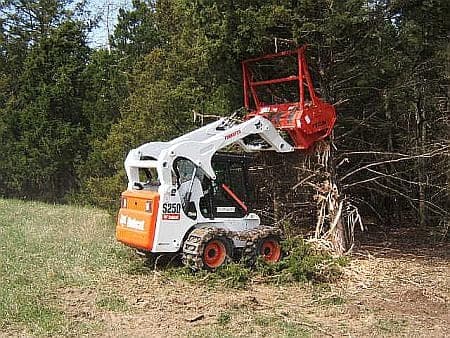
A Bobcat skid steer with a mulching head grinds brush, thorn, tall grass, invasive growth, and small trees into ground cover in a single pass — opening up field edges, woodland, and access paths without digging up the ground underneath.
This service may be right for your property if…
- Property owners who can't walk or see across an overgrown field or lot
- Landowners opening up a woodland trail or access path
- Farms and estates reclaiming field edges taken over by brush
- Anyone who wants land cleared without the digging and root disturbance excavation involves
What’s included
- Brush, thorn, and bramble removal
- Tall-grass and invasive-growth knockdown
- Small-diameter tree and sapling clearing
- Field-edge and tree-line cleanup
- Woodland openings and access-path clearing
Good to know
Mulching works best on brush and small-diameter growth — what's realistic for your ground depends on what's actually growing there and the terrain, which we walk with you before quoting. We don't estimate clearing scope over the phone.
Understanding this work
Forestry mulching uses a skid steer fitted with a mulching head — a rotating drum with carbide teeth — to grind standing brush, thorny growth, tall grass, invasive vegetation, and small-diameter trees into mulch right where they stand, instead of piling, burning, or hauling the material away.
It's the right tool for opening up field edges, reclaiming a woodland trail, clearing an access path, or knocking back growth along a lot line — anywhere the goal is clearing vegetation without the root and topsoil disturbance that digging or grubbing involves.
What a mulching head can handle depends on tree size, density, terrain, and ground access. It isn't a substitute for logging or excavation on larger trees, steep or unstable ground, or areas a skid steer can't physically reach — it doesn't clear every tree, every condition, or every acreage, and we won't tell you it does. We walk every property before quoting so the scope matches what's actually growing there.
Common property situations
- Overgrown field edges reclaiming pasture or yard space
- A woodland trail or access path that's grown in
- Invasive brush or thorn taking over a lot line
- Land prep before fencing, building, or replanting
What affects scope
Worth thinking through before you request an estimate — the more of this you send, the better we can scope it from your request alone.
- Acreage or area to be cleared
- Density and size of what's growing (brush vs. small trees)
- Terrain and slope
- Equipment access to the site
- Desired finish — bare ground vs. mulch left as cover
What happens next
From request to work on the ground
Submit your property details
Use the request form to tell us about the property, the work you're considering, and site conditions.
JKE reviews the request
Kevin looks over what you've sent and confirms the basics before scheduling anything.
JKE contacts you
By whichever method you asked for — phone, text, or email — to talk through the job.
Site visit, if needed
JKE reviews the property in person for anything that can't be scoped from the request alone.
Estimate prepared
A real number based on what's actually on the ground — not a phone-quoted guess.
Work scheduled after you agree
Nothing is scheduled before that — submitting the request form doesn't book an appointment on its own.
Submitting the request form doesn’t book an appointment — a real person at JKE reviews every request and follows up to schedule a site visit directly, always subject to availability and project fit.
- Serving Hudson Valley property owners
- Equipment-led land and property work
- No appointment is scheduled until JKE confirms it
- Photos can be included with the request
Get a scope for your property
Request an estimate with your property details, or call to discuss it first.